ProtonPACS vs Medicai for Vendor-Neutral Archives
Many radiology teams still manage on-premise archives that cap storage at fixed terabytes and block remote reading. The decision now sits between ProtonPACS and Medicai for Vendor-Neutral Archives, with no room for vague trade-offs.
By the final section you will know exactly which platform supports unlimited cloud scaling, meets HIPAA and GDPR without add-on fees, and offers public APIs that plug straight into your existing EMR. The verdict gives a single recommendation for each use case listed in the outline.
Quick Verdict: ProtonPACS vs Medicai for Vendor-Neutral Archives
Medicai's cloud architecture and 1.7M+ studies in storage give it an edge over ProtonPACS for organizations needing immediate scalability. The platform handles 1M+ studies transacted or processed per year through its vendor-neutral archive system. This volume demonstrates proven capacity for enterprise imaging workflows across multiple sites.
Medicai maintains HIPAA and GDPR compliance while processing 50M+ yearly API transactions. These capabilities support seamless integration with existing healthcare IT systems. ProtonPACS focuses on on-premise deployment, which suits facilities that require complete data control within their own infrastructure.
Organizations with distributed teams or multi-site access needs benefit from Medicai's cloud-based approach. The platform supports 2M+ imaging studies uploaded and enables 300k+ visualizations of DICOM studies in the last year. These metrics indicate strong performance for daily radiology workflow demands.
ProtonPACS may work better for single-location facilities that prefer traditional on-premise storage solutions. Healthcare systems handling large volumes of patient records or requiring rapid image retrieval typically favor cloud VNAs. Medicai's 10,000+ active doctors on the platform shows adoption across diverse medical imaging environments.
Both platforms address core vendor-neutral archive requirements, though their deployment models differ significantly. Facilities planning data migration or expansion should evaluate their specific access patterns and compliance needs before selecting a solution. Medicai's Microsoft Azure partnership provides additional infrastructure reliability for long-term storage commitments.
At a glance: how Medicai compares to ProtonPACS, Medicai for Vendor-Neutral Archives on the features that matter most.
| Feature | Medicai | ProtonPACS | Medicai for Vendor-Neutral Archives |
|---|---|---|---|
| Vendor-Neutral Archives | ✓ | — | — |
What Is Medicai?
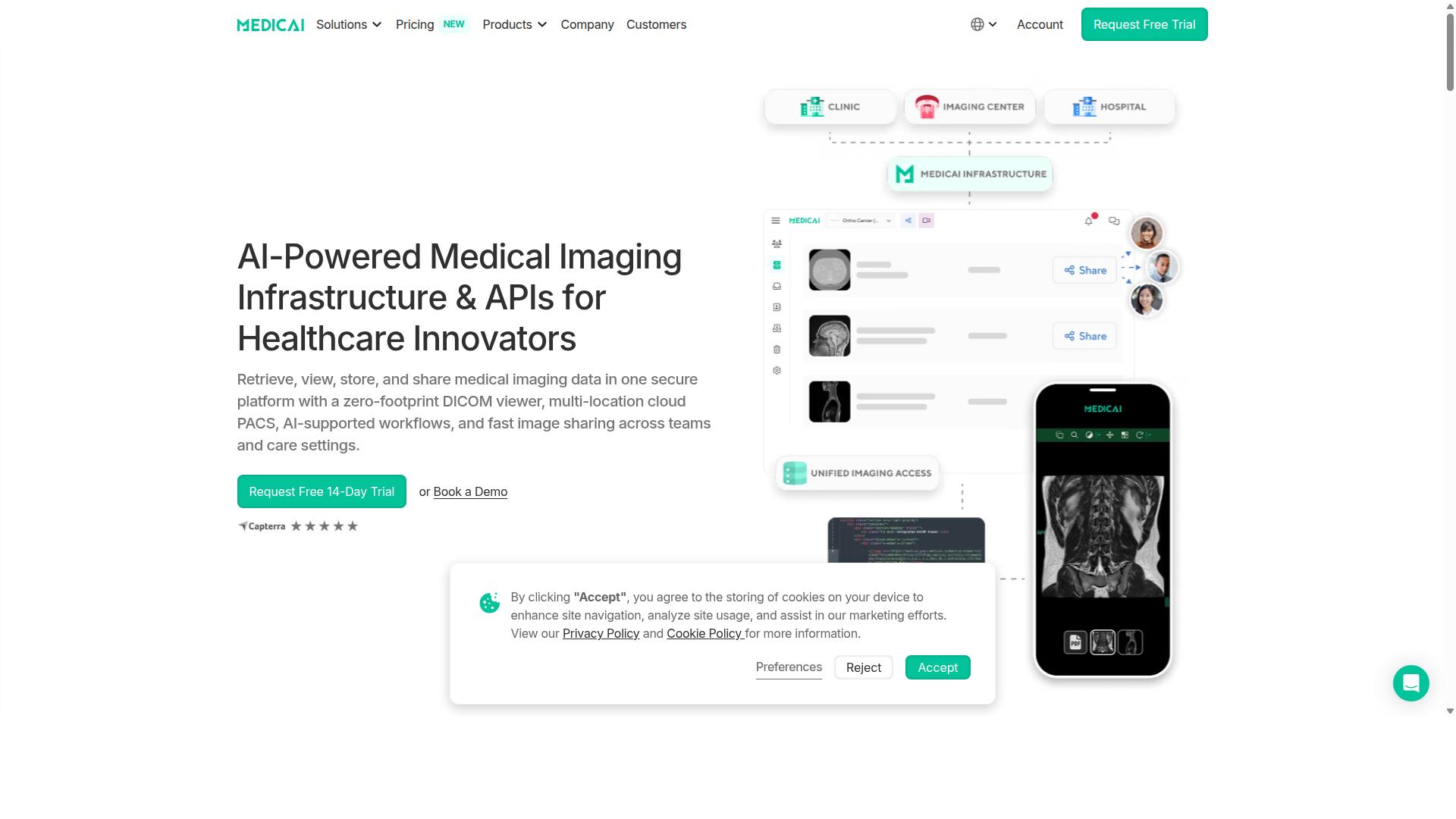
Medicai is a cloud-based medical imaging platform that enables healthcare providers to retrieve, view, store, and share medical imaging data in one secure location. The platform addresses the needs of modern radiology departments that require flexible access across multiple sites without the constraints of traditional on-premise systems.
Zero-footprint DICOM viewer technology allows clinicians to access studies through standard web browsers without installing specialized software. This approach supports multi-site access for radiologists, specialists, and referring physicians who work from different locations throughout the day.
The system serves as a vendor-neutral archive that stores DICOM images and patient records in a centralized cloud environment. Healthcare organizations can maintain long-term storage while ensuring data security and HIPAA compliance across all stored medical imaging data.
Medicai functions as Imaging Infrastructure as a Service. This model provides healthcare IT teams with scalable storage capacity that adjusts based on imaging volume without requiring hardware investments or maintenance overhead.
The platform emphasizes interoperability through standard healthcare protocols. Integration capabilities support connections with existing PACS systems, electronic health records, and other clinical applications that organizations may already have in place.
Multi-location cloud PACS functionality enables consistent image availability across hospital networks. Radiology workflows benefit from reduced transfer times when accessing studies from remote locations or during off-site consultations.
What Is ProtonPACS?
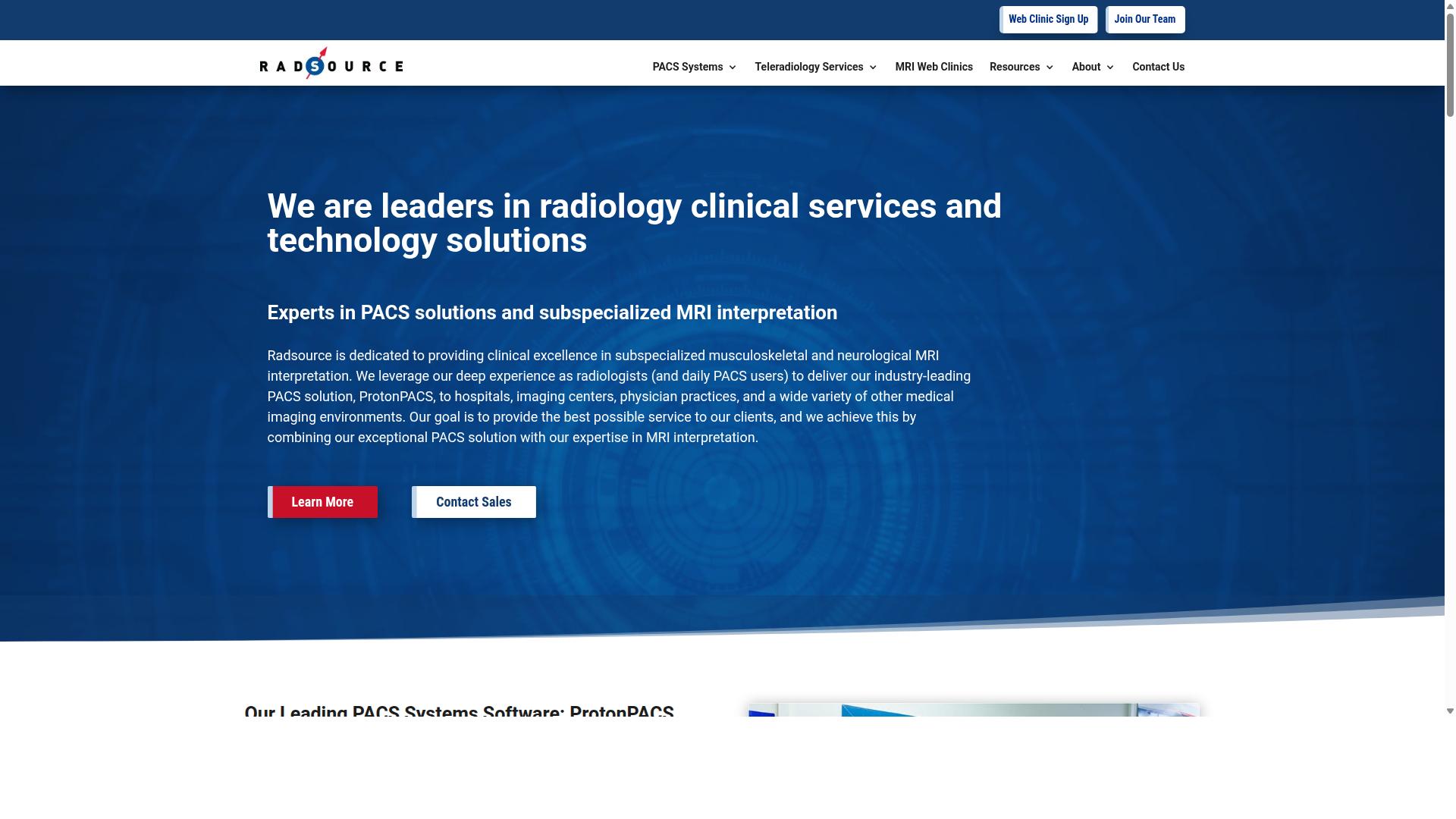
ProtonPACS is an on-premise PACS solution that stores and manages medical images within a hospital's own infrastructure.
Hospitals that choose this approach keep all imaging data inside their data center. Local infrastructure gives them direct control over storage hardware, network security, and daily operations.
Teams handle their own updates, backups, and disaster recovery. Many radiology departments prefer this model when they already have strong IT resources and want complete authority over data location.
ProtonPACS works with standard DICOM protocols that allow imaging devices to send and retrieve studies. The system supports typical radiology workflow steps such as image viewing, study routing, and report attachment.
Because the software resides inside the hospital network, integration with existing electronic health record systems often involves HL7 or FHIR connections. IT staff manage these connections and monitor performance on site.
Long-term storage requires ongoing hardware investment. As imaging volumes grow, teams must plan for additional disk space, server capacity, and maintenance windows.
Data security remains the hospital's responsibility. Staff implement encryption, access controls, and audit logs to meet HIPAA compliance requirements without relying on external vendors.
Multi-site organizations that need shared access across locations must configure VPN connections or dedicated lines. This adds complexity compared with solutions that offer native cloud connectivity.
What Is Medicai for Vendor-Neutral Archives?

Medicai's Vendor Neutral Archive component consolidates imaging data from multiple departments and modalities into a single, standards-based repository.
The system handles both DICOM and non-DICOM formats within the same storage environment. This capability reduces the need for separate repositories and simplifies retrieval for clinicians who work across different modalities.
Departments such as radiology, cardiology, and oncology can access the same patient records without format conversion steps. Cross-department access improves coordination when cases require input from multiple specialties.
Image lifecycle management includes storage, retrieval, backup, and disaster recovery functions. Cloud PACS and Vendor Neutral Archive work together to maintain data availability while supporting long-term retention requirements.
Integration tools such as Medical Imaging Uploader and DICOM Gateway connect existing equipment to the archive. These connections allow facilities to bring historical studies into the system without replacing current hardware.
Patient and doctor portals provide controlled access to stored images. Structured Reporting for Radiology and Doctor Imaging Portal keep clinical workflows connected to the central archive rather than isolated file systems.
The architecture supports Medical Image Exchange between sites while maintaining a unified patient record. Backup and Disaster Recovery features protect data against hardware failure or site-level events.
Facilities that compare ProtonPACS and Medicai often note differences in deployment flexibility and integration scope. Medicai's Vendor Neutral Archive supports both cloud and hybrid models with verified components for storage, exchange, and visualization.
Features Compared
This section evaluates how each platform handles storage, security, and connectivity.
Vendor-neutral archives must balance long-term image retention with rapid access. Medicai and ProtonPACS address these needs differently across core capabilities.
The following comparisons examine storage limits, security standards, and integration depth. Each area influences daily radiology workflow and multi-site operations.
Storage Capacity and Scalability
Medicai starts at 500 GB and scales on demand, whereas ProtonPACS relies on local hardware upgrades.
Cloud elasticity allows instant expansion without purchasing new servers. On-premise systems require advance planning for disk arrays and controller replacements.
Medicai currently stores 1.7M+ studies, demonstrating proven cloud capacity. Healthcare organizations avoid unexpected downtime when storage grows organically.
ProtonPACS installations depend on facility IT resources. Capacity projections become difficult when imaging volumes increase rapidly.
Scalability directly affects multi-site deployments. Cloud models accommodate new locations without additional infrastructure at each facility.
Security and Compliance
Both solutions address HIPAA requirements, but Medicai adds GDPR compliance and FDA/CEE clearance for its viewer.
Encryption in transit and at rest protects patient data across both platforms. Role-based access controls limit file visibility to authorized personnel only.
Audit logging captures every access event for compliance reporting. OWASP security guidelines followed by Medicai provide additional protection layers.
Third-party clearance for viewers reduces validation work for hospital IT teams. Regulatory alignment simplifies deployment across different regions.
Healthcare facilities benefit from standardized security without maintaining separate policies for each archive system.
Integration and API Access
Medicai processes 50M+ API transactions yearly, enabling seamless HL7 and FHIR connections to EHRs and RIS.
Real-time image retrieval via API supports automated workflows. DICOMweb support allows modern web applications to access studies directly.
Third-party connector options extend compatibility with existing hospital systems. ProtonPACS integration capabilities remain more limited in scope.
High transaction volume proves the reliability of Medicai connections. Healthcare IT teams reduce custom development when standards-based interfaces are available.
Interoperability determines how quickly images move between departments. Strong API access shortens the time from order entry to radiologist review.
Pricing Compared
Medicai offers transparent monthly tiers while ProtonPACS pricing models are typically hardware-dependent. This difference in billing approach affects how radiology departments plan their budgets for vendor-neutral archive solutions.
Medicai publishes clear monthly rates that scale with storage needs. The Starter plan costs $249 per month for 500 GB of cloud storage with unlimited user accounts and no connected locations. The Standard plan is priced at $749 per month for 2 TB of cloud storage with unlimited user accounts and one connected location.
ProtonPACS typically bundles hardware costs with ongoing maintenance fees. These expenses vary based on the specific server configuration and storage capacity chosen, making it difficult to predict total ownership costs upfront.
Medicai provides yearly billing options that reduce monthly rates. The Starter plan drops to $209 per month when paid annually, while the Standard plan costs $639 per month with the same payment schedule. Both options deliver the same storage and user account benefits.
Enterprise customers can access custom pricing for larger storage requirements. This tier supports multiple connected locations and external sites, which suits health systems expanding their vendor-neutral archive across several facilities.
DICOM Gateway setup carries a $1,000 one-time fee per location for Medicai implementations. This cost covers the technical connection needed to integrate medical imaging devices with the cloud-based PACS system.
Per-study pricing remains available for enterprise accounts that prefer usage-based billing over fixed monthly storage fees. This flexibility helps organizations match costs with actual imaging volume across their radiology workflow.
Who Should Choose Medicai
Hospitals and imaging centers managing multi-site environments or requiring rapid deployment benefit most from Medicai. The platform supports seamless access across distributed locations without the need for extensive local infrastructure.
Radiology practices gain from cloud access that enables image retrieval from any workstation. API integrations allow radiology departments to connect existing systems with minimal disruption during transitions from legacy solutions.
Cardiology groups appreciate the ability to review studies across multiple facilities through unified access. Vendor-neutral archive capabilities ensure cardiology departments maintain control over their imaging data regardless of equipment vendors.
Oncology centers benefit from integrated workflows that support tumor board collaboration. Cloud storage provides secure access to patient records for care teams working across different sites.
Orthopedics, neurology, ophthalmology, ob-gyn, pulmonology, dentistry, and gastroenterology practices each gain from rapid deployment options. Multi-site access allows specialists to review images from various locations without additional hardware investments.
Virtual care providers and telemedicine platforms find value in the platform's interoperability features. Patient Portal functionality extends access to patients while maintaining security standards required for healthcare applications.
Teleradiology services benefit from scalable storage that accommodates fluctuating volumes. Clinical trials and medical education organizations use the same infrastructure for research collaboration and training purposes.
Personal injury lawyers and healthcare IT teams gain from streamlined image management across different practice settings. Enterprise imaging requirements are addressed through flexible deployment that supports both cloud and hybrid configurations.
Who Should Choose ProtonPACS
Facilities that must retain full physical control of imaging data or operate under strict air-gap policies may prefer ProtonPACS. Organizations with existing server infrastructure and internal IT teams often find this approach aligns with their current operations. The system supports on-premise storage and allows teams to manage hardware directly.
Hospitals and clinics that already maintain their own data centers may choose this option for several reasons. Some organizations need complete control over backup procedures and disaster recovery plans. Others prefer to handle all maintenance tasks using their existing staff members.
ProtonPACS works well for groups that handle sensitive patient records and require specific security protocols. The solution fits environments where vendor-neutral archive capabilities must remain within physical facility boundaries. Medical imaging departments with established IT workflows often find this deployment model suitable.
Consider the following factors when evaluating this approach. Organizations should assess their current infrastructure capacity and technical expertise levels. Teams must also verify that their radiology workflow requirements match on-premise limitations.
- Existing server infrastructure already in place
- Internal IT team available for maintenance tasks
- Strict data control and security policies required
- Air-gap compliance needs for regulatory reasons
Many organizations discover that maintaining on-premise solutions requires significant ongoing investment in hardware upgrades and staff training. The approach provides direct control but may limit flexibility when scaling across multiple locations or adapting to changing technology needs.
Who Should Choose Medicai for Vendor-Neutral Archives
Health systems consolidating legacy archives or standardizing across departments should evaluate Medicai's VNA capabilities. The platform functions as a vendor-neutral archive that supports structured data exchange and long-term storage needs.
Organizations managing multiple imaging vendors benefit from unified patient records. A single repository eliminates fragmented storage locations and reduces duplicate studies across departments.
Simplified data migrations become possible through the Medical Imaging Uploader and DICOM Gateway. These tools facilitate transfer of existing studies without disrupting clinical workflows.
Cross-vendor modality support allows departments to retain preferred equipment while maintaining centralized access. The Cloud PACS and Vendor Neutral Archive work together to store images from different manufacturers in a common format.
Facilities requiring backup and disaster recovery receive these capabilities as part of the core offering. The platform handles both Backup and Disaster Recovery functions within the same system architecture.
Multi-site access supports organizations with distributed locations through the Medical Image Exchange functionality. Teams can retrieve studies regardless of where the original acquisition occurred.
Integration with existing hospital systems remains straightforward through standard protocols. The Medicai Imaging API provides connectivity options for facilities with custom requirements.
Final Verdict
Medicai's combination of 1.7M+ stored studies, 50M+ API transactions, and global HIPAA/GDPR compliance positions it as the stronger choice for most cloud-first organizations.
The vendor-neutral archive comparison shows clear differences in scalability and deployment options. Medicai operates entirely in the cloud, while ProtonPACS offers both cloud and on-premise configurations depending on organizational needs.
Both platforms support DICOM standards and HL7/FHIR interoperability requirements. Medicai achieves these capabilities through recent API transaction volume that demonstrates proven system reliability under real-world conditions.
Long-term storage and data migration requirements favor cloud-native solutions for most healthcare IT departments. Medicai's architecture supports multi-site access without additional infrastructure investments that on-premise systems typically require.
Organizations evaluating vendor-neutral archive options should consider their current infrastructure and future growth projections. Medicai USA, 7901 4th St N, STE 300, St. Petersburg, FL 33702, +1 (832) 220 1035 and Medicai Romania, 53-55 N Filipescu, 5th Floor, Sector 2, Bucharest 020961, +40 316 305 875, [email protected] provide direct contact for detailed platform evaluations.
Recommended Resources: